The Room Wasn’t Finished
In 2011, I helped a family renovate a room in West Virginia. I thought I was there to do construction. One quiet moment changed my understanding of what it means to be present for another person.
She was standing at the window, looking out into the woods.
I’d been helping renovate that room for a couple of days. The family and I had torn out the dark wood paneling from the 1960s or ‘70s, the kind that seemed to swallow whatever natural light entered the room. We’d hung fresh drywall in its place.
There was still work to do. Screws remained exposed, and the seams needed finishing.
But the room was already different.
When I walked in that morning, Deb didn’t turn around. I wasn’t even sure she knew I was there.
Then she reached her hand backward.
I walked over, took her hand, and stood beside her.
Tears were quietly rolling down her cheeks. I didn’t know what was happening.
Then she began to tell me.
I can’t promise every word is exact after fifteen years, but I remember her saying something very close to this:
“This room has always been a dark place. It was his room. I’ve always hated this room. I’ve avoided it for years. Even after he was gone. It was just too painful.
“But now it’s different. It’s filled with light. It is no longer his room. It’s ours. It belongs to my whole family. It belongs to you too. Thank you.”
I hadn’t known any of that.
I remember standing beside her, holding her hand, looking out at the woods.
Neither of us said anything for a while.
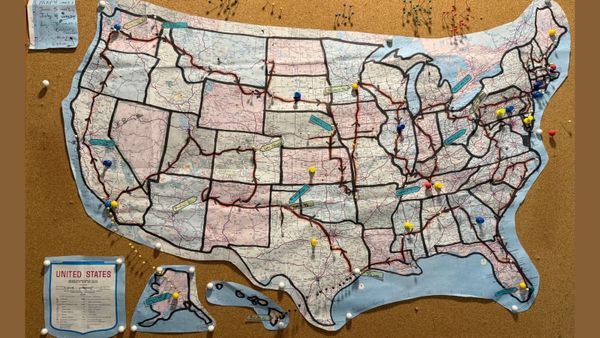
On April 1, 2011, my thirty-sixth birthday, I gave away my possessions and set out to serve a family in every state.
I’d spent years building a life that wasn’t working for me. I wanted to tear it down to the foundation and start again. This time, I wanted to build my life around service.
I didn’t know exactly what that would mean. That was part of the experiment.
I wanted to find out what might happen if I made myself available to other people, without knowing in advance what they would need or where it might lead.
My offer was simple: about three days of my time, my labor, and whatever skills I could contribute.
Sometimes I completed a project. Other times I helped a family make progress on something they’d been trying to accomplish for months or years. People had jobs, children, and responsibilities. An extra pair of hands could make a difference, even when the work continued after I left.
I wasn’t there to be paid. I was there to help.
Every week, I entered another home. Sometimes I knew the people. Often they were strangers.
I learned to pay attention. Where did people put their shoes? How did their mornings work? What did they want help with, and what did they prefer to do themselves?
I wanted to be useful without becoming a burden.
I was a guest in someone else’s life, and I tried to act like one.
West Virginia was the most welcoming state of my journey.
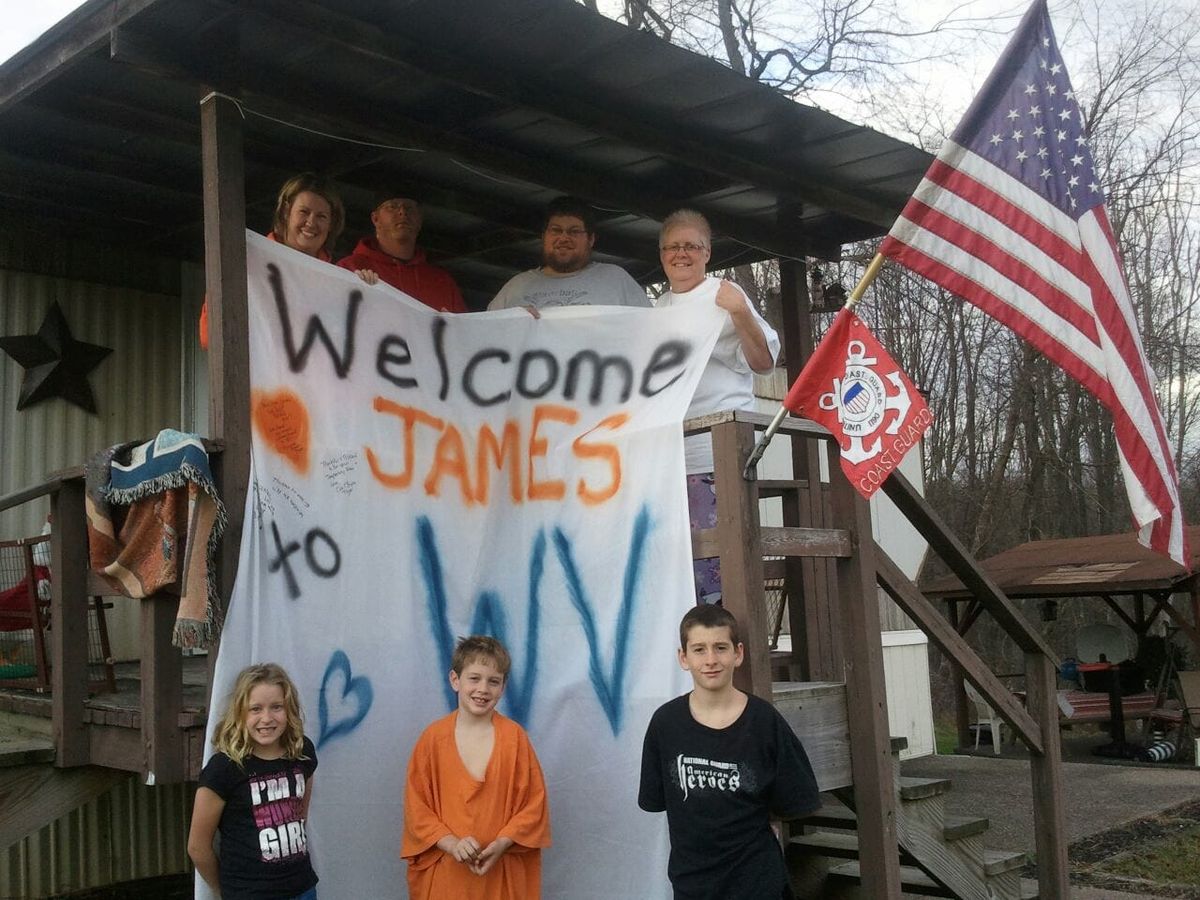
When I arrived, there was a large “Welcome James to West Virginia!” banner waiting for me, put up by people who had never met me.
Deb opened her home and gave me her own bedroom, choosing to sleep elsewhere so I could be comfortable.
Across fifty states, only five people gave up their bedrooms for me. I remember every one of them.
There’s something unusual about sleeping in a stranger’s bedroom. It’s one of the most private places in a home, a space people ordinarily protect. Deb gave me hers.
I’d set out to give something of myself to other people, yet I kept finding myself on the receiving end of generosity I hadn’t expected.
The room she wanted renovated was an addition to her home overlooking the woods. We removed the old paneling and installed drywall.
I knew the work. I knew what needed to come down, what needed to go up, and what still needed finishing.
What I didn’t know was what the room meant to her.
She hadn’t told me about its history. To me, it was a renovation. To Deb, it was part of a life I knew very little about.
That morning at the window, she let me see a little of it.
I remember continuing the work afterward. We did some taping and mudding, though I can’t recall exactly how much we finished. The room still hadn’t been painted when I left.
In October 2026, I returned to West Virginia for the first time in fifteen years.
I’d been invited to give a keynote for the West Virginia Behavioral Healthcare Providers Association.
I flew into Pittsburgh, rented a car, and drove toward Roanoke. The trees, the hills, the winding roads—it all brought back memories.
I caught myself singing John Denver’s “Take Me Home, Country Roads,” just as I had in 2011. Fifteen years later, apparently I still had the same soundtrack.
I remembered the welcome banner, the families, and the generosity I’d experienced.
And I remembered Deb.
I wondered how she was doing, whether she still lived in the same house, and what had become of that room.
I left her a voicemail. I also reached out to the friend in Ohio who had introduced us, hoping we might reconnect.
I wasn’t able to arrange a visit before I had to leave.
I still don’t know what became of the room, or whether Deb remembers that morning the way I do.
On the day I left West Virginia in 2011, Deb took me for a walk.
She talked about human kindness and how each of us has the ability to help another person.
Then she said something I’ve never forgotten.
“So whenever you get done with one journey, come back here, because you’ll always have a home. Welcome home.”
And she gave me a hug.